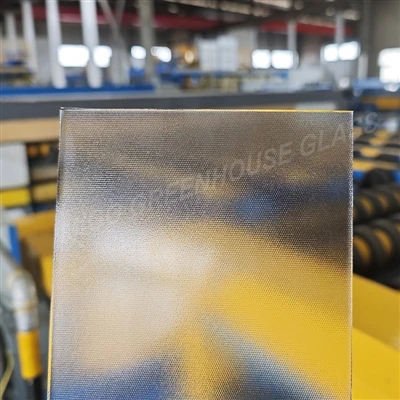
In theory, solar glass looks very straightforward.
Same thickness, same size, same specification sheet.
But once it enters real projects - containers, warehouses, module factories - you start to notice something interesting.
Even glass that "meets the same spec" doesn't always feel the same.
1. On paper everything matches, in reality not always
Two batches can both say 3.2mm low-iron tempered glass.
But when you stand next to them, there can still be small differences.
Not dramatic. Just a slightly different tone, or how the light passes through it.
Most datasheets won't show this. It only becomes obvious when you actually handle the material.
2. Handling changes how people judge quality
A lot of "quality impression" actually comes from handling, not testing.
Glass that moves smoothly during unloading, stacks cleanly, and doesn't create small surprises in packaging - people naturally feel it is better.
Even if the numbers are similar.
On the other hand, if a batch has small issues during handling, it often gets remembered in a different way.
3. Packaging is part of the product, even if nobody says it
In solar glass business, packaging is not just for protection.
It quietly affects how the glass is perceived.
A well-packed crate usually gives confidence before the glass is even seen.
Loose straps, slightly damaged corners, or uneven stacking can create doubts even if the glass inside is fine.
4. Different factories have different "habits"
Every glass factory has its own production habits.
Some focus heavily on surface finish.
Some care more about edge processing.
Some are very strict on washing, others focus on furnace stability.
All of them can still produce qualified solar glass, but the "feel" of the product can be slightly different.
Experienced buyers often recognize this without even checking the full technical report.
5. Real projects expose small differences
In small orders, everything looks similar.
But in large projects - hundreds of containers, multiple suppliers - differences start to show.
Not in a single sheet, but in consistency.
This is usually where customers start to notice which supply is more stable over time.
6. It's not always about better or worse
Sometimes people try to rank glass as "good" or "bad".
In practice, it is more about fit and consistency.
Different project conditions, different module designs, different handling environments - all of these change how glass performs in real use.
Solar glass looks simple when you read the specification.
But in real logistics, real factories, and real projects, it behaves more like a material that reveals its details slowly, step by step.