When people talk about solar collectors, most of the attention goes to the absorber coating.
Selective coating.
Heat absorption.
Thermal efficiency.
Those topics come up all the time.
The front glass doesn't.
Maybe because it just sits there and looks simple.
But in reality, the glass decides something very early in the process-how much sunlight is allowed to enter the collector in the first place.
If part of the energy is lost here, nothing behind the glass can get it back.
Not all sunlight makes it through the glass
It's easy to think of glass as something completely transparent.
It isn't.
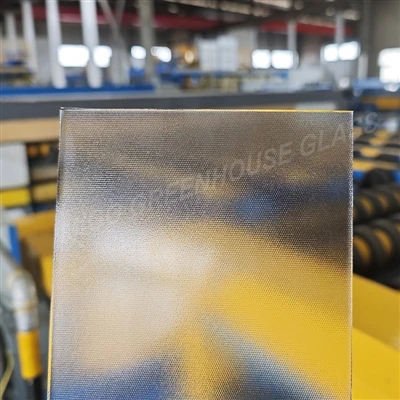
Every sheet of glass reflects a little light, and it also absorbs a small amount itself.
With ordinary float glass, the iron content is higher, so more solar energy is absorbed before it ever reaches the absorber plate.
That's one reason low-iron glass has become the normal choice for solar collectors.
It simply lets more of the available sunlight continue into the system.
Looking clear doesn't always mean working better
Two pieces of glass can look almost identical on a warehouse rack.
Most people couldn't tell them apart.
A solar collector can.
Solar collectors respond to solar energy, not to what our eyes think looks clear.
That's why manufacturers pay attention to solar transmittance instead of judging the glass by appearance alone.
Sometimes the difference isn't something you can see.
It's something the collector experiences every sunny day.
Reflection happens every morning
The first thing sunlight meets is air.
The second is glass.
Whenever light moves from one material to another, a small part of it is reflected away.
There's nothing unusual about that.
It happens every single day.
This is also why anti-reflective glass has become more common in higher-performance collectors.
Nobody expects one sheet of glass to create a huge improvement.
The idea is simply to lose a little less sunlight before it reaches the absorber.
The glass has a harder job than it looks
On a winter morning, the outside surface may still be cold.
By midday, the absorber underneath has become much hotter.
Then the temperature drops again after sunset.
The glass keeps repeating this cycle, season after season.
That is why tempered glass is almost always used.
It isn't there to improve efficiency.
It's there because the glass needs to survive years of thermal stress without becoming the weak point of the collector.
Dirt slowly changes everything
This part is easy to overlook.
A collector doesn't suddenly lose performance because of one dusty day.
It happens gradually.
Dust builds up.
Pollen sticks to the surface.
After enough time, less sunlight reaches the absorber.
We've seen installations where cleaning the glass made a more noticeable difference than people expected.
Nothing else changed.
Just the surface.
Good glass doesn't attract attention
People rarely walk past a solar collector and compliment the front glass.
They notice hot water.
They notice system performance.
The glass quietly does its work in the background.
At MIGO GLASS, we've always felt that's probably how good solar collector glass should be.
Not because it's invisible.
But because it keeps passing sunlight through, year after year, without giving anyone a reason to think about it.
That's a small job on paper.
In practice, it's one of the first steps in turning sunlight into usable heat.
Please find more information about Solar Glass Solution here!!