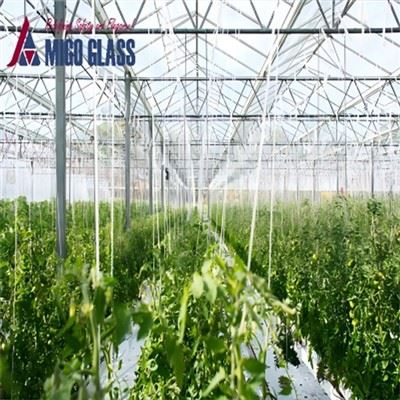
As commercial greenhouse agriculture continues to develop, condensation control is becoming an important consideration in greenhouse glass selection. For greenhouse operators and agricultural project developers, maintaining stable light transmission and suitable growing conditions is essential for efficient crop production.
Beyond transparency and durability, the performance of greenhouse glass under humid conditions is receiving greater attention from international buyers.
Condensation Creates Challenges for Greenhouse Operations
Condensation commonly occurs when warm, humid air inside a greenhouse comes into contact with cooler glass surfaces. As moisture accumulates, water droplets may form on the interior of greenhouse panels.
These droplets can change how sunlight passes through the glass, potentially reducing light transmission and affecting the distribution of natural sunlight.
For commercial growers, this issue is particularly important during colder seasons when daylight availability is already limited.
Anti-Condensation Glass Supports Light Transmission
To address these challenges, anti-condensation greenhouse glass is attracting attention in modern horticultural projects.
Specialized hydrophilic coatings can encourage moisture to spread across the glass surface as a thin film rather than forming individual droplets.
Under suitable conditions, this approach can reduce optical disturbances caused by condensation and help maintain more consistent light transmission.
Potential benefits include:
- Reduced formation of individual water droplets
- More stable light transmission under humid conditions
- Improved greenhouse light management
- Greater flexibility in selecting greenhouse glazing materials
However, actual results depend on coating technology, environmental conditions, and long-term surface durability.
Diffuse Glass Offers Additional Benefits
Alongside condensation management, diffuse greenhouse glass remains an important option for commercial greenhouse construction.
Unlike conventional clear glass, diffuse glass distributes incoming sunlight more evenly throughout the growing area. This can help reduce concentrated light exposure and support improved illumination within crop canopies.
For greenhouse manufacturers, selecting suitable glass surface characteristics is an important part of balancing light transmission, diffusion, and condensation performance.
International Buyers Focus on Glass Quality
As greenhouse projects become more specialized, contractors and distributors are evaluating glass products based on optical performance, thickness, durability, and manufacturing consistency.
High-quality greenhouse glass must also meet project-specific installation requirements and withstand long-term exposure to changing environmental conditions.
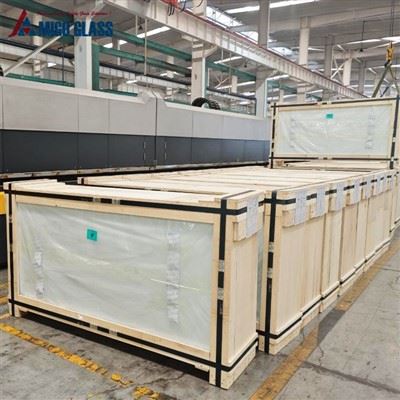
MIGO Glass offers glass solutions for greenhouse applications, supporting customers with different specifications and project requirements.
As commercial horticulture advances, condensation control and reliable optical performance will remain important factors in greenhouse glass development and purchasing decisions.