Understanding How Haze Influences Light Diffusion and Crop Performance
When selecting greenhouse glass, many buyers focus on light transmission. However, another equally important optical property is haze.
Haze determines how sunlight is scattered after passing through the glass. The right haze level can improve light distribution, enhance photosynthesis, and increase crop yields.
But what exactly affects the haze of greenhouse glass, and how do you choose the right haze level for your project?
This guide explains the key factors and helps greenhouse builders, contractors, and growers make informed purchasing decisions.
What Is Haze in Greenhouse Glass?
Haze refers to the percentage of transmitted light that is diffused or scattered rather than passing directly through the glass.
Unlike visible light transmission, which measures the amount of light entering the greenhouse, haze measures how that light is distributed.
A higher haze value creates softer, more evenly distributed sunlight throughout the greenhouse.
This helps reduce shadows and improves light penetration into the lower canopy of crops.
Why Is Haze Important?
Many commercial greenhouse projects now prioritize light diffusion over maximum direct sunlight.
Proper haze can provide several benefits:
- More uniform light distribution
- Reduced plant shading
- Better photosynthesis throughout the canopy
- Lower risk of leaf burn and hot spots
- Improved crop uniformity
- Higher overall yields
For crops such as tomatoes, cucumbers, peppers, flowers, and leafy vegetables, diffused light often delivers better growing conditions than direct sunlight alone.
1. Glass Surface Pattern
The surface texture is one of the biggest factors influencing haze.
Clear Greenhouse Glass
Clear glass has a smooth surface with very low haze.
Most sunlight travels directly through the glass, creating strong shadows and uneven light distribution.
Diffuse Patterned Glass
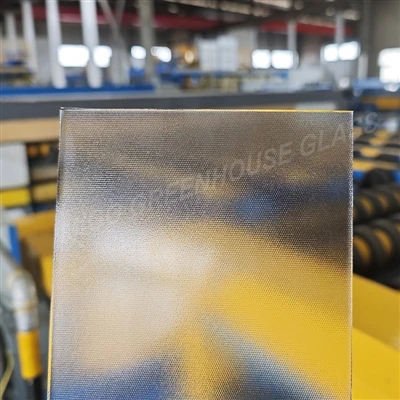
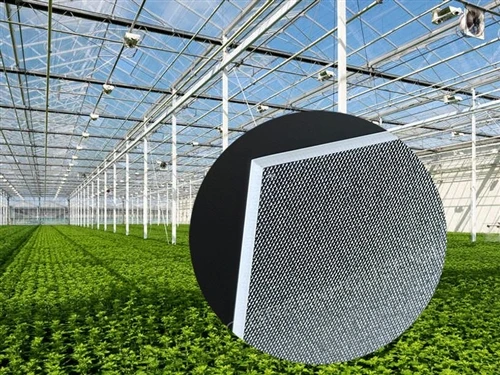
Patterned greenhouse glass is designed with micro-textures that scatter incoming sunlight.
Different surface patterns produce different haze values.
Generally:
- More pronounced textures = higher haze
- Smoother textures = lower haze
Manufacturers carefully optimize these patterns to balance haze and light transmission.
2. Glass Composition
Low-iron greenhouse glass allows more sunlight to enter the greenhouse because it contains fewer iron impurities.
Although low-iron glass primarily improves light transmission, it also supports better optical performance when combined with diffuse surface treatments.
High-quality raw materials help maintain consistent haze across production batches.
3. Surface Coatings
Special coatings can influence optical properties.
Anti-Reflective (AR) Coatings
AR coatings primarily increase light transmission by reducing reflection.
Although they have little direct impact on haze, they improve the overall amount of useful light reaching crops.
When combined with diffuse glass, AR coatings provide excellent optical performance.
4. Tempering Process
Tempering strengthens greenhouse glass, but poor process control may affect optical quality.
Modern continuous tempering furnaces help maintain:
- Uniform haze
- Stable light transmission
- Excellent flatness
- Consistent product quality
Experienced manufacturers carefully control heating and cooling parameters to ensure consistent optical performance.
5. Manufacturing Consistency
For large greenhouse projects, optical consistency is just as important as optical performance.
Variations in surface pattern, raw materials, or production processes can result in different haze levels between panels.
Uneven haze may lead to inconsistent crop growth within the same greenhouse.
Professional greenhouse glass manufacturers implement strict quality control to ensure every panel meets the specified haze requirements.
6. Glass Cleanliness and Surface Condition
Dust, dirt, water stains, and environmental contamination can alter the way light is scattered.
Regular cleaning helps maintain the designed haze performance and ensures crops continue receiving optimal light.
Scratches or surface damage may also affect light diffusion over time.
Does Higher Haze Always Mean Better Performance?
Not necessarily.
Many buyers assume the highest haze value will always produce the best crop yields.
In reality, the optimal haze depends on several factors:
- Crop variety
- Local climate
- Greenhouse design
- Geographic location
- Seasonal sunlight conditions
Excessively high haze may reduce direct light intensity, while very low haze may create uneven light distribution.
The goal is to achieve the right balance between light transmission and light diffusion.
How to Choose the Right Haze Level
When specifying greenhouse glass, consider the following questions:
- What crops will be grown?
- Is the greenhouse located in a region with intense sunlight or frequent cloudy conditions?
- Is uniform crop growth a priority?
- Does the project require AR coating?
- Can the supplier guarantee consistent haze across all glass panels?
Working with an experienced greenhouse glass manufacturer can help ensure the glazing system is optimized for your specific growing conditions.
Why Commercial Greenhouses Choose Diffuse Low-Iron Glass
Today, many modern horticultural greenhouses use low-iron tempered diffuse glass because it combines:
- High light transmission
- Optimized haze
- Uniform light distribution
- Strong mechanical performance
- Long service life
- Improved crop productivity
This combination has become the preferred glazing solution for high-performance commercial greenhouse projects worldwide.\

Conclusion
The haze of greenhouse glass is influenced by several factors, including surface pattern, glass composition, coatings, tempering quality, manufacturing consistency, and surface condition.
Rather than choosing the highest haze value available, growers should focus on selecting a glass solution that provides the best balance between light transmission, light diffusion, and long-term crop performance.
At MIGO GLASS, we supply low-iron tempered greenhouse glass, diffuse greenhouse glass, and AR-coated horticultural glass engineered to deliver consistent optical performance for commercial greenhouse projects around the world.
Our technical team can help you choose the most suitable haze level based on your crops, climate, and greenhouse design.