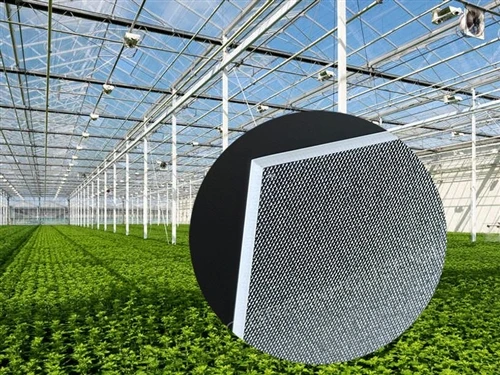
As a core material in modern facility agriculture, greenhouse glass's forming process directly impacts its light transmittance, strength, and service life. Currently, mainstream greenhouse glass forming technologies primarily consist of three key steps: float glass, calendaring, and tempering. These steps work synergistically to meet the unique demands of agricultural environments.
The float glass process is the fundamental forming method for high-quality greenhouse glass. Molten glass is poured onto a tin bath, which has a lower density than glass. Gravity and surface tension create a smooth, uniform ribbon of glass. By precisely controlling the tin bath temperature (approximately 600-1100°C) and the drawing speed, glass sheets with a thickness of only 3-12mm and a surface smoothness tolerance of less than 0.1mm can be produced. Float glass boasts a light transmittance exceeding 91% and contains minimal internal bubbles and impurities, providing a high-quality substrate for subsequent processing.
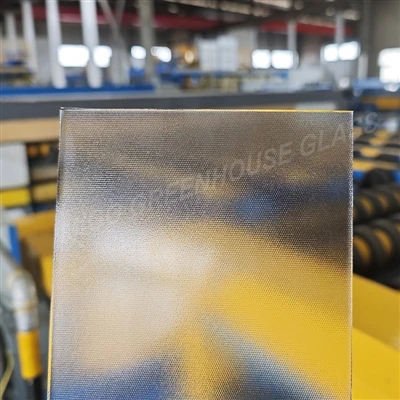
To meet the unique demands of greenhouse applications, some glass requires custom shaping through calendaring. A pair of rotating rollers presses molten glass into specific textures (such as diffuse reflective lines or prismatic structures). This not only controls the light scattering angle for uniform coverage of the crop canopy, but also reduces direct sunlight intensity to prevent burns. The forming temperature of rolled glass is typically 100-150°C lower than that of the float glass process to maintain the durability of the roller molds.
Finally, the tempering process significantly enhances the mechanical strength and safety of the glass. Rapid cooling creates a compressive stress layer (approximately 0.1-0.2mm deep) on the glass surface, retaining tensile stress within. This increases impact resistance by 5-10 times and creates blunt-angled particles when shattered. 4mm-thick tempered greenhouse glass, widely used in modern agriculture, can withstand wind pressures up to 1200Pa, sufficient to withstand typhoon-strength winds.
With the rise of photovoltaic agriculture, some greenhouse glass is also integrating anti-reflective coatings or spectrally selective films to further optimize light and heat management. These process innovations are collectively driving the development of greenhouse glass towards efficiency, intelligence, and sustainability.