Before Buying Greenhouse Glass, Check These Specifications
Selecting greenhouse glass is about far more than comparing prices. The right glass directly influences light distribution, crop productivity, installation efficiency, and the long-term performance of the greenhouse. For builders, contractors, and growers of greenhouse glass, evaluating the following five specifications before placing an order can help avoid costly mistakes and ensure a successful project.
1. Glass Size and Thickness
Accurate dimensions are essential for efficient installation and structural safety. Even small dimensional deviations can lead to installation delays or additional labor costs. Thickness should also match the greenhouse design and local wind or snow load requirements. Common greenhouse glass thicknesses include 3.2 mm and 4 mm tempered glass, offering an optimal balance between strength, weight, and light transmission.
2. Pattern Type
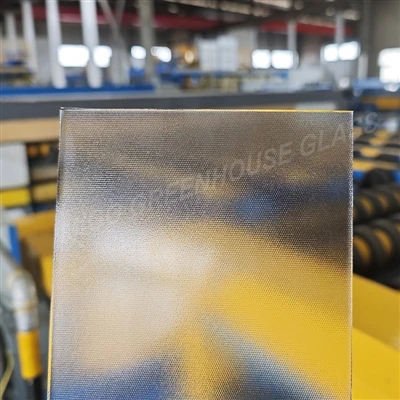
The glass pattern determines how sunlight is diffused inside the greenhouse. Different embossed patterns provide different light-scattering effects, making them suitable for various climates and crop types. Selecting the appropriate pattern helps reduce shadows, improve light uniformity, and create a more stable growing environment throughout the greenhouse.
3. Light Transmission and Haze
These two optical properties are among the most important performance indicators. High light transmission allows more natural sunlight to reach crops, supporting photosynthesis and improving productivity. Meanwhile, an appropriate haze level diffuses incoming light, minimizing hotspots and leaf burn while delivering more uniform light distribution to the lower canopy.
4. Glass Flatness
Flatness is often overlooked but plays a significant role in both installation quality and greenhouse appearance. High-quality flat glass ensures accurate alignment with greenhouse frames, minimizes installation stress, and maintains consistent optical performance across the entire glazing system.
5. Temper Fragmentation
For tempered greenhouse glass, fragmentation quality is a critical safety indicator. Properly tempered glass breaks into numerous small, blunt particles rather than large sharp shards, significantly reducing injury risks. Consistent fragmentation also reflects a stable tempering process and reliable manufacturing quality.
Invest in Quality, Not Just Price
High-quality greenhouse glass delivers value far beyond the initial purchase cost. Precise dimensions, optimized optical performance, excellent flatness, and reliable tempering quality contribute to easier installation, improved crop growth, lower maintenance, and a longer service life. Before making your next greenhouse glass purchase, verify these five specifications carefully-they are the foundation of a durable, efficient, and high-performing greenhouse.