Choosing the Right Horticultural Diffused Tempered Glass
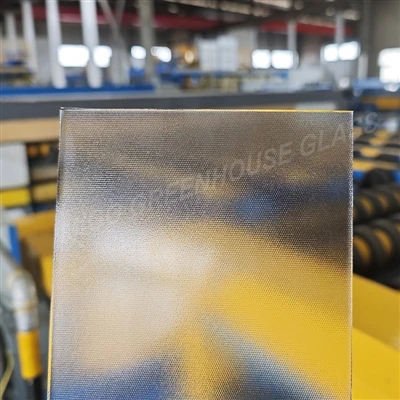
Horticultural Diffused Tempered Glass is designed to modify the way sunlight enters a greenhouse. Instead of allowing solar radiation to remain highly directional, the glass scatters part of the incoming light and creates a more uniform diffuse-light environment.
However, low, medium, and high haze glass provide different optical performance. The best choice depends on the crop type, canopy density, solar radiation, climate, and greenhouse design.
Comparison of Different Haze Levels
| Haze Level | Light Distribution | Main Characteristics | Advantages | Suitable Conditions |
|---|---|---|---|---|
| Low Haze | Mainly direct light | Limited light scattering; higher proportion of directional radiation | Strong top-canopy illumination; maintains high direct-light intensity | Low-to-moderate solar radiation; crops requiring strong direct light |
| Medium Haze | Balanced direct + diffuse light | Moderate scattering with good light transmission | Improves light uniformity; enhances canopy penetration; balances transmission and diffusion | Most commercial greenhouse applications; variable climates |
| High Haze | Mainly diffuse light | Strong light scattering; significantly reduces direct-light concentration | Better canopy light distribution; reduces localized excessive radiation; improves penetration into dense foliage | High solar radiation; dense-canopy crops; regions with intense sunlight |
Which Crops Match Different Haze Levels?
The selection of haze should be connected to the crop canopy structure and radiation requirements, rather than simply choosing the highest possible haze.
| Crop / Application | Recommended Haze | Why? |
| Tomatoes | Medium–High | Dense foliage benefits from improved diffuse light penetration and more uniform canopy illumination. |
| Cucumbers | Medium–High | Large leaves and dense canopy can benefit from better distribution of diffuse radiation. |
| Bell Peppers | Medium | Provides a balance between direct radiation and diffuse light for stable crop development. |
| Strawberries | Low–Medium | Moderate diffusion can improve light uniformity while maintaining sufficient direct PAR. |
| Leafy Greens | Medium–High | Uniform light distribution is beneficial for crops with relatively dense plant populations. |
| Ornamental Plants | Low–Medium | Moderate diffusion can reduce excessive direct radiation while maintaining adequate light levels. |
| High-Radiation Greenhouses | High | Strong diffusion helps redistribute intense solar radiation and reduce concentrated light on the upper canopy. |
Why Is Medium Haze Often a Balanced Solution?
Medium-haze glass provides a compromise between hemispherical light transmission and diffuse light transmission. It can reduce the concentration of direct sunlight without excessively sacrificing the amount of usable solar radiation entering the greenhouse.
For general commercial greenhouse projects, medium haze can therefore provide a flexible solution when crop requirements and seasonal radiation conditions vary.
The difference between low-, medium-, and high-haze Horticultural Diffused Tempered Glass is essentially a difference in how solar radiation is distributed inside the greenhouse.
Low haze emphasizes direct light, medium haze provides a balanced direct/diffuse environment, while high haze maximizes light diffusion and canopy uniformity.
There is no universally "best" haze level. The optimal specification should be determined by matching the glass optical performance with the crop, climate, greenhouse structure, and target growing conditions. For high-value commercial crops, this systematic approach can help maximize usable light and improve the efficiency of the greenhouse light environment.