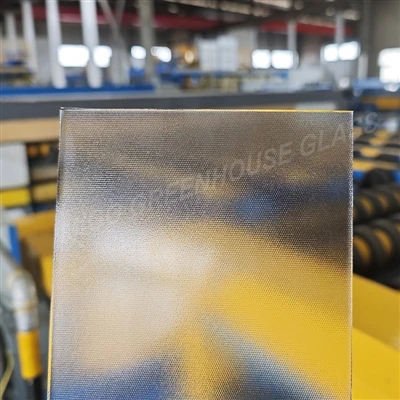
Ultra-Clear Patterned Tempered Glass vs. Ultra-Clear Patterned Tempered Glass With 2ARC: Which Is Better for Greenhouses?
In modern greenhouse projects, glass does more than provide natural light. It directly affects light distribution, crop growth, and the long-term efficiency of the greenhouse. For projects requiring high light transmission and good optical performance, Ultra-Clear Patterned Tempered Glass and Ultra-Clear Patterned Tempered Glass With 2ARC are both reliable options. But what is the difference between them?
1. Ultra-Clear Patterned Tempered Glass: A Balance of Light Transmission and Diffusion
Ultra-clear patterned tempered glass is manufactured using ultra-clear glass as the substrate. A specific surface pattern is created through the rolling process, followed by tempering.
The ultra-clear substrate provides high visible light transmission, while the patterned surface changes the direction of incoming light and helps distribute sunlight more evenly inside the greenhouse.
This glass is suitable for conventional agricultural greenhouses and projects where light diffusion is an important consideration. It also offers good mechanical strength and thermal resistance. By scattering direct sunlight, the patterned surface can help reduce strong shadows and improve light distribution within the crop canopy.
2. Ultra-Clear Patterned Tempered Glass With 2ARC: Improved Optical Efficiency
Ultra-clear double-sided coated patterned tempered glass adds a functional coating to both sides of the glass.
Depending on the coating technology and project requirements, the coating can help reduce surface reflection and minimize light loss at the glass surface. This allows more useful light to enter the greenhouse.
For modern commercial greenhouses, especially those growing high-value crops, this additional optical performance can be valuable. When the greenhouse is designed for maximum light utilization, reducing reflection losses can contribute to better overall light efficiency.
3. How Should You Choose?
The two products are not simply a standard version and an upgraded version. They are designed for different project requirements.
If the project focuses on cost efficiency, basic light transmission, light diffusion, and safety, ultra-clear patterned tempered glass can meet the requirements of many greenhouse applications.
If the project places greater emphasis on high light transmission, reduced reflection losses, and long-term optical efficiency, double-sided coated patterned tempered glass can provide additional advantages.
The final selection should be based on the crop type, local climate, greenhouse structure, target light transmission, coating performance, and project budget.
For modern greenhouse projects, the goal should not simply be to choose the glass with the highest specification. The key is to find the right balance between light transmission, diffusion, reflection control, durability, and cost.
The right glass solution can help every ray of sunlight entering the greenhouse deliver greater value.