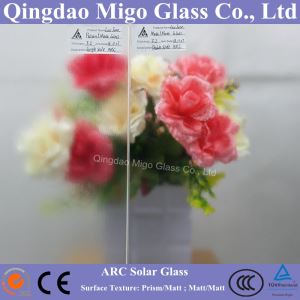
Solar glass is the first optical layer that sunlight passes through before reaching the photovoltaic cells. For PV module manufacturers, the optical properties of this glass can influence how much solar energy reaches the cells. One important factor behind these properties is the iron content of the glass.
This is why low-iron solar glass is widely used as cover glass for photovoltaic modules. For buyers sourcing solar glass in bulk, understanding iron content can help when comparing specifications, evaluating samples, and maintaining consistent module production.
What Is Iron Content in Solar Glass?
Iron occurs naturally in the raw materials used for glass production. In conventional glass, iron compounds contribute to the familiar greenish appearance that can often be seen along the glass edge.
For photovoltaic applications, manufacturers aim to reduce iron content through raw material selection and controlled glass production.
The result is low-iron solar glass, which provides higher solar transmission than conventional glass of comparable thickness and surface configuration.
For buyers, iron content should therefore be considered together with measured optical performance rather than treated only as a chemical specification.
How Iron Content Affects Solar Transmittance
When sunlight reaches a PV module, part of the incoming energy can be reflected or absorbed before it reaches the solar cells.
Iron-related absorption within the glass can contribute to these optical losses. Reducing iron content helps limit absorption and allows more usable solar radiation to pass through the cover glass.
However, iron content alone does not determine the final transmittance value.
Glass thickness, surface pattern, composition, AR coating, manufacturing quality, and the measurement method can all influence reported optical performance. PV module manufacturers should therefore evaluate the complete solar glass specification.
Why Low-Iron Glass Is Important for High-Efficiency Modules
As PV cell technologies improve, manufacturers increasingly focus on reducing optical and electrical losses throughout the complete module.
The cover glass is part of this optimization.
Low-iron solar glass can be combined with other features, such as patterned surfaces and anti-reflective coatings, to improve light transmission into the module.
For high-efficiency PV modules, including modern glass-glass and bifacial module designs, selecting suitable cover glass helps manufacturers achieve the optical requirements of the overall module design.
The correct specification should always be determined according to the module configuration and performance targets.
Iron Content and Glass Thickness Should Be Considered Together
Solar glass is available in different thicknesses depending on module design.
When comparing products, buyers should avoid evaluating iron content independently from thickness. Optical transmission through glass is affected by the distance light travels through the material as well as its composition.
For example, an ultra-thin solar glass product and a thicker cover glass may have different optical and mechanical requirements even when both use low-iron compositions.
This is particularly relevant for manufacturers evaluating 1.6mm ultra-thin solar glass for lightweight or glass-glass PV module designs.
Why Batch Consistency Matters
For PV module manufacturers purchasing large quantities of solar glass, consistency can be as important as the specification of an individual sample.
Variations in raw materials or production conditions may influence glass appearance and optical properties. Buyers should therefore consider how the supplier controls production from batch to batch.
For long-term procurement programs, specifications should define the required parameters and corresponding inspection or testing methods.
Consistent solar glass helps module manufacturers maintain stable incoming-material standards across continuous production.
What Should Buyers Check Before Ordering?
Before placing a bulk solar glass order, buyers should review both chemical and optical specifications.
Important parameters may include iron content, solar transmittance, glass thickness and tolerance, dimensions, surface pattern, haze where applicable, and AR coating requirements.
Buyers should also confirm how these parameters are measured. Comparing values obtained using different test conditions or standards can lead to misleading conclusions.
For custom PV module projects, samples can be evaluated before mass production to confirm compatibility with the intended module design and manufacturing process.
Selecting Low-Iron Solar Glass for PV Production
Iron content is an important parameter in photovoltaic glass, but it should not be considered in isolation.
For PV module manufacturers, the objective is to select glass that provides the required combination of solar transmittance, thickness, mechanical properties, surface characteristics, coating performance, and production consistency.
When sourcing low-iron solar glass in bulk, buyers should compare complete technical specifications rather than relying on a single transmittance or iron-content value.
Working with an experienced solar glass manufacturer can also help PV module producers coordinate glass specifications with module design, production requirements, and long-term procurement needs.