How to Choose Greenhouse Glass for High-Value Crops
High-value crops are agricultural products that generate relatively high economic returns per unit of growing area. Examples include tomatoes, cucumbers, peppers, strawberries, flowers, herbs and specialty vegetables.
Because these crops often require precise growing conditions, greenhouse glass selection becomes especially important.
1. Focus on light quality, not only quantity
High-value crops need sufficient light for photosynthesis, but excessive direct radiation can also create plant stress. The glass should provide an appropriate balance between transmission and diffusion.
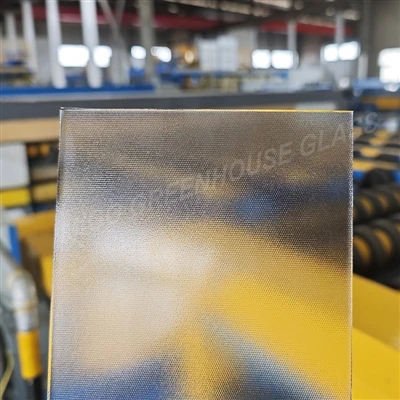
2. Consider diffused glass
Diffused greenhouse glass can scatter sunlight and distribute it more evenly through the crop canopy. This may help reduce strong light differences between upper and lower leaves.
3. Match the glass to the climate
In regions with strong solar radiation and high temperatures, greenhouse glass should be selected together with ventilation, shading and cooling systems. Higher light transmission is not always the best solution.
4. Pay attention to durability
Commercial greenhouses are long-term investments. Glass should have stable optical performance, suitable mechanical strength and good resistance to environmental conditions.
5. Choose according to the complete growing system
Crop type, latitude, local climate, greenhouse structure, shading system and cultivation method should all be considered before selecting the glass.
For high-value crops, every improvement in the growing environment can have a direct impact on production efficiency and product quality.
Therefore, greenhouse glass should not be treated as a simple construction material. It is an important part of the crop production system.
The right glass should help growers achieve the best balance between light, temperature, durability and crop performance.
Crops such as tomatoes, cucumbers, peppers, flowers and other high-value greenhouse crops can benefit from a more uniform growing environment, depending on the specific climate and cultivation system.
However, diffused glass is not automatically suitable for every greenhouse. The correct combination of light transmission and haze should be determined according to the crop, location and greenhouse design.
For modern greenhouse construction, the question is gradually changing from "How much light can enter?" to "How effectively can the available light be used?"That shift is one of the key reasons why diffused greenhouse glass is attracting more attention.