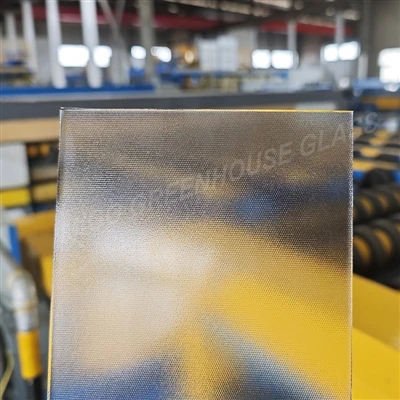
A critical technical question in photovoltaic (PV) module design is whether textured Prismatic/Matt (PM) patterned glass compromises mechanical reliability compared to smooth float glass of the same thickness. While microscopic surface variations introduce minor theoretical differences in raw glass, thermal processing and polymer encapsulation ensure equal structural integrity in real-world solar installations.
1. Raw Glass State: Stress Distribution vs. Micro-Valleys
Evaluating both glass types in their raw, un-tempered state highlights key physical differences:
Float Glass: Possesses two flat, uniform surfaces. External bending forces distribute evenly across the surface, yielding a higher raw flexural strength threshold in laboratory testing.
Patterned Glass: Features microscopic surface geometry (prism/matt ridges). The bases of these micro-patterns create micro-valleys that act as minor stress concentration points under extreme physical loads.
2. Equalizing Structural Performance: Tempering & Lamination
Raw glass is never deployed directly in PV modules. The standard module manufacturing process eliminates the raw strength gap through two key phases:
Thermal Tempering: Both glass types undergo physical tempering to introduce high compressive stress layers on the glass surfaces. This process increases overall impact and bending resistance exponentially compared to raw glass.
Polymer Encapsulation (EVA/POE): During module lamination under heat and pressure, polymer encapsulant films (EVA or POE) melt and flow into every microscopic cavity of the patterned glass. This seals the micro-valleys and creates a cohesive composite structure, effectively distributing external mechanical loads evenly across the entire assembly.
3. Real-World Module Testing & IEC Standards
When assembled into complete PV modules and subjected to standard mechanical testing under IEC 61215 guidelines:
Static Wind Load (2400 Pa): Both tempered patterned glass and float glass pass with equal structural margins.
Heavy Snow Load (5400 Pa): Both glass types demonstrate equivalent resistance to severe surface pressure without fracturing.
Hail Impact Resistance: Both withstand standard ice-ball impact testing (25 mm diameter at 23 m/s) reliably.
Technical Summary
Raw Flexural Strength (Un-tempered): Float Glass is slightly higher due to uniform stress distribution; Patterned Glass has minor stress concentration points at pattern bases.
Tempered & Laminated Reliability: Equal Performance. Encapsulants fill micro-grooves and distribute load evenly across the composite layer.
Mechanical Standard Compliance (IEC 61215): Identical. Both reliably withstand 5400 Pa snow load and 2400 Pa wind load tests.
Overall Engineering Value: Because patterned glass provides a +1.5% to 2.0% optical power gain without sacrificing real-world durability, it remains the standard structural material for high-efficiency solar modules.