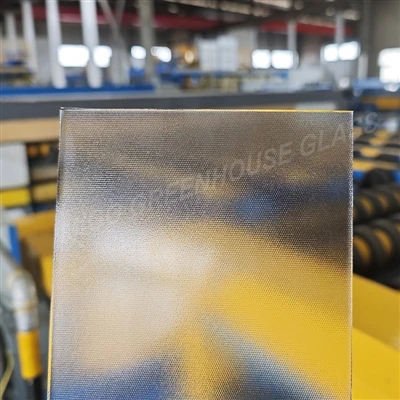
As PV manufacturers continue to improve module efficiency, the performance of every component has become increasingly important. Solar glass is the first material sunlight passes through before reaching the solar cells, which means its optical transmission, strength, coating quality, and long-term durability can directly influence module performance.
For manufacturers producing high-efficiency solar modules, proper solar glass selection should therefore consider much more than thickness and price.
Start with Solar Transmittance
High solar transmittance is one of the most important requirements for PV module glass.
Low-iron solar glass contains less iron oxide than conventional float glass, reducing the green tint commonly seen in ordinary architectural glass. This allows more solar radiation to reach the cells underneath.
When comparing suppliers, buyers should request data for:
- Solar transmittance
- Iron content
- Glass thickness
- Optical consistency
- AR coating performance, if applicable
For high-efficiency modules, even relatively small optical improvements can become meaningful when applied across large-scale production.
Consider Anti-Reflective Coating
Many modern PV modules use anti-reflective (AR) coated solar glass.
The purpose of the coating is to reduce reflection at the glass surface and allow more light to enter the module.
However, buyers should not evaluate AR glass based only on its initial transmission value. Coating uniformity and long-term stability are equally important.
A poor-quality coating may show inconsistent appearance or reduced performance after prolonged outdoor exposure.
Choose the Correct Glass Thickness
Thickness affects both mechanical performance and module weight.
Traditional modules commonly use thicker front glass, while lightweight and glass-glass module designs have increased demand for thinner tempered solar glass.
The correct specification depends on:
| Factor | Why It Matters |
|---|---|
| Module Design | Determines glass configuration |
| Mechanical Load | Influences strength requirements |
| Module Weight | Important for transport and installation |
| Tempering Quality | Critical for thinner glass |
| Production Line | Glass must match module equipment |
Manufacturers should confirm that thinner glass can maintain the required flatness and mechanical properties before moving into mass production.
Check Surface and Tempering Quality
High-efficiency production lines require consistent materials.
Variations in glass dimensions, flatness, surface texture, or coating can create problems during lamination and module assembly.
Professional buyers should evaluate:
- Dimensional tolerance
- Flatness
- Edge quality
- Surface defects
- Tempering consistency
- Coating uniformity
For bulk purchasing, production consistency is often more important than the quality of one sample.
Evaluate Long-Term Reliability
PV modules are expected to operate outdoors for decades. Solar glass must therefore withstand UV exposure, temperature changes, humidity, wind, and other environmental conditions.
A reliable PV module glass supplier should provide relevant technical data and quality documentation rather than only an initial sample.
Final Thoughts
Selecting glass for high-efficiency solar modules requires balancing optical performance, mechanical strength, processing accuracy, and long-term durability.
The lowest-priced glass is not necessarily the lowest-cost solution for module manufacturers. Inconsistent transmission, coating defects, or dimensional problems can affect production yield and finished module performance.
For long-term procurement, manufacturers should prioritize stable solar transmittance, reliable tempering, consistent AR coating, dimensional accuracy, and batch-to-batch quality control when evaluating solar glass suppliers.