At first glance, solar glass does not seem very different from other types of glass. In actual module production, however, even small differences in the glass can influence power output, lamination and long-term reliability.
Transmission is important, but it is not the only figure worth checking. The raw glass, surface pattern, coating, tempering, dimensions and packing method should all be confirmed before an order goes into production. Otherwise, a seemingly minor issue may not become visible until the glass reaches the module assembly line.
What Makes Solar Glass Different?
Solar glass is designed to let sunlight reach the solar cells while protecting them from weather and impact. It normally contains less iron than standard clear glass, which gives it a clearer appearance and allows more light to pass through.
The difference is easy to see from the edge. Ordinary clear glass often looks green, especially in thicker sheets. Low-iron glass has much less of this green colour because the iron content in the raw material is kept at a lower level.
Still, buyers should not judge solar glass by transmission alone. It will remain outdoors for years, facing summer heat, cold weather, hail, wind, moisture and continuous sunlight. Its strength and long-term stability are therefore just as important as its optical performance.
Rolled Glass or Float Glass?
The photovoltaic industry mainly uses patterned rolled glass and solar float glass.
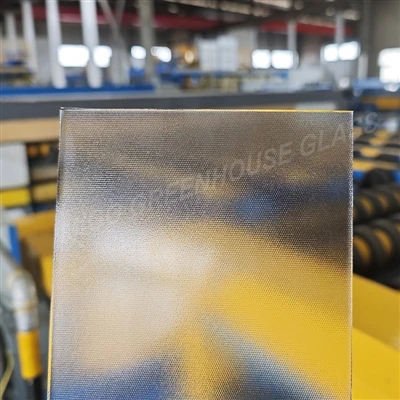
Patterned solar glass has a textured surface made during the rolling process. The pattern helps incoming light enter the module and limits direct reflection. It is the usual choice for the front side of crystalline silicon modules.
Solar float glass is smooth and flat. It is commonly considered for thin-film modules, glass-glass modules and products where a smooth surface or a particular appearance is required.
The choice usually comes down to the module structure and the manufacturer's lamination process. Before confirming the glass, it is worth checking which type has already been tested on the buyer's production line.
What to Check on AR-Coated Glass
An anti-reflective coating is added to reduce the sunlight lost through surface reflection. With less light reflected away, more light can reach the cells.
A high initial transmission result is useful, but it does not tell the whole story. The coating also needs to remain stable after handling, lamination and years of outdoor use. Poor coating durability may lead to scratches, patchy areas or a gradual drop in performance after exposure to moisture and weather.
Appearance can matter as well. Slight colour differences may not change the module's output, but they can become quite noticeable when hundreds of modules are installed together. For projects with strict appearance requirements, coating colour and uniformity should be agreed in advance.
Tempering and Edge Quality
Most solar glass is heat-treated so that it can better withstand impact and temperature changes. After proper tempering, the glass is considerably stronger than untreated glass. If it breaks, it should fragment into small pieces rather than large, sharp sections.
The result depends heavily on temperature control inside the tempering furnace. If heating or cooling is uneven, the glass may show roller wave, edge lift or local distortion. These issues can make lamination more difficult, particularly on automated production lines.
Edges are another area that deserves close inspection. Small chips or cracks may not look serious when the glass is packed, but they can develop into breakage during tempering, transport or module assembly. For this reason, edge inspection should be part of the normal quality check, not something done only after a complaint occurs.
Dimensions and Production Tolerances
A module assembly line needs glass that arrives in consistent sizes. A few millimetres of variation can affect positioning, lamination or frame assembly, especially when the line is highly automated.
The purchase specification should clearly state:
Glass type and thickness
Finished length and width
Size and thickness tolerances
Edge finish
Pattern direction
AR-coating requirement
Tempering standard
Hole and cut-out positions
Inspection and packing requirements
Whenever possible, these details should be shown on a drawing. A short description in an email may be understood differently by the purchasing team, factory and glass supplier. For regular orders, keeping an approved sample and a signed technical specification can save a great deal of discussion later.
Packing Solar Glass for Export
Solar glass is relatively thin and is usually shipped in large quantities. Tempering improves its strength, but the edges can still be damaged by a direct knock. Many transport breakages start with an edge chip caused during loading or unloading.
Inside the crate, the sheets should not rub against hard materials. Suitable separators and edge protection are needed, and the glass must be held firmly enough to prevent movement during the journey. The crate itself should also be designed for repeated forklift handling, port operations and ocean transport.
Moisture protection is another point to discuss, particularly for long shipping routes or humid destinations. Even a well-built crate can cause trouble if water enters during storage or transportation.
Loading the crates correctly inside the container is just as important. Their weight must be distributed properly, and each crate should be secured so that it cannot shift when the vessel moves.
Looking Beyond the Unit Price
When quotations are close, it is tempting to choose the lowest price per square metre. In practice, this difference may be small compared with the cost of stopping a production line or replacing glass that cannot be laminated properly.
Problems such as unstable dimensions, coating marks, edge damage and transport breakage usually create extra work for several departments. Purchasing has to discuss the claim, production has to rearrange the schedule, and the customer may have to wait for replacement material.
For this reason, buyers should also look at the supplier's quality control, technical communication and packing experience. If the module design or delivery plan changes, the glass specification should be reviewed again before production starts.
Solar glass may account for only one part of a complete module, but it stays with that module throughout its working life. Checking the details at the beginning is much easier than dealing with them after the glass has already arrived.
Please find more information about Solar Glass Solusion here!!