Most solar glass inquiries begin with the same two questions: What is the transmittance, and what is the price?
Both are important, of course. But after supplying glass for different PV projects, we have found that the problems customers face are often related to something else. The glass may have a good test result and still cause trouble during lamination. It may leave the factory in good condition but arrive with breakage. Sometimes two production batches meet the same specification but look slightly different after the modules are installed.
These problems usually come down to details.
Take transmittance as an example. A number on a test report means very little without knowing what was tested. Was the glass 2.0 mm or 3.2 mm? Was it coated? Which pattern was used? A coated 2.0 mm sample will naturally give a different result from thicker, uncoated glass.
We sometimes receive two reports from customers who want to know which product is better. In many cases, the samples were tested under different conditions, so the figures cannot really be compared.
The source of the result is also worth checking. Was it taken from one selected sample, or is it a typical reading from normal production? A module factory does not receive one perfect sheet. It receives thousands of sheets, sometimes made in several batches. A stable result across the full order is much more useful than an unusually high reading from one sample.
Flatness is another issue that is easily missed.
When solar glass is standing inside a wooden case, a small amount of bow is difficult to see. Once the sheet reaches an automated module line, the situation changes. If it does not lie correctly on the equipment, it may affect positioning or lamination. The production line may have to be slowed down while the operator makes adjustments.
This happens more often with large, thin sheets. A 2.0 mm sheet reacts differently in the furnace from 3.2 mm glass. It heats faster, cools faster and is less forgiving when the furnace settings are not well controlled.
If your production line has a clear limit for overall bow or roller wave, include it in the purchase specification. Do not wait until the order arrives to decide what level is acceptable.
Edges deserve the same attention.
Buyers usually spend more time checking the surface because scratches, bubbles and coating marks are easy to notice. Edge damage may be much smaller, but it can be more serious.
A tiny chip caused during cutting or grinding may not break the glass immediately. The sheet could pass inspection, be packed and delivered, then break during lamination or handling. This does not always mean that the tempering was poor. The starting point may have been a small defect that was already present on the edge.
We recommend checking all four sides of the sample, particularly when using thin glass. Running a finger carefully along the edge can sometimes reveal damage that is difficult to see under normal factory lighting.
AR coating brings its own questions. Most discussions focus on how much the coating improves transmittance. We also look at whether it is applied evenly and how well it stays on the glass.
A solar module will spend years outside. Its surface will be exposed to moisture, dust, strong sunlight and cleaning. A high reading on newly coated glass is encouraging, but the coating also needs to retain its performance after weathering and abrasion.
Color differences are another concern. One coated sheet may look fine when inspected alone. If the coating varies between batches, the difference can become obvious when hundreds of modules are installed side by side.
Then there is packing.
This part is often discussed only after the glass specification and price have been settled. For export orders, we prefer to discuss it earlier.
Thin solar glass can travel through several warehouses and ports before it reaches the customer. It is lifted by forklift, moved by truck and exposed to constant vibration at sea. If there is space inside the case, the sheets may move against each other. If the straps are too tight, pressure may be concentrated in one area.
The packing method therefore needs to suit the sheet size, thickness and loading direction. Using more wood or more steel straps does not automatically make a case safer. The support points, cushioning and pressure distribution are just as important.
There is no single figure that tells you whether solar glass is good or bad. We look at the transmittance, but we also check the dimensions, flatness, edges, coating and packing. These are ordinary production details, yet they often decide whether the glass can be used smoothly after delivery.
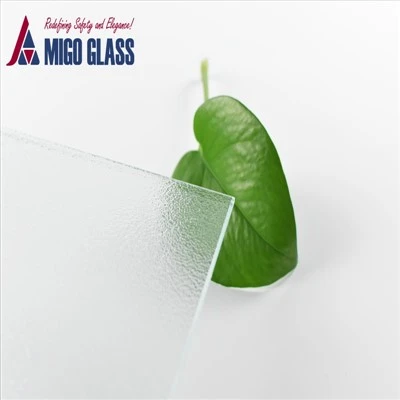
MIGO GLASS supplies low-iron patterned solar glass, including tempered and AR-coated options. When sending an inquiry, please include the size, thickness, quantity and coating requirement. If you already have limits for bow, edge quality or packing, send those as well. It is always better to discuss them before production starts.
Please find more information about Solar Glass Solusion here!!