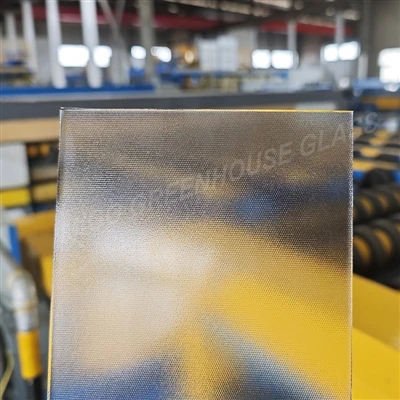
Solar glass is going to get hot.
There isn't really a way around it.
Once a module or solar collector is outside in direct sunlight, the glass is exposed to heat for hours. The temperature can also change quite a lot between daytime and nighttime.
What matters is not simply how hot the glass becomes. The repeated heating and cooling is where things get more interesting.
The glass doesn't heat up evenly
Take a large piece of solar glass on a sunny day.
The middle area may be sitting directly over the warmer part of the module, while the edges are exposed to the surrounding air. Wind can cool one part of the surface faster than another.
The difference may not be large enough to notice by looking at the glass.
But glass reacts to temperature changes.
It expands when heated and contracts again as it cools. If different areas of the sheet are changing at different rates, stresses can develop inside the glass.
This is normal to some extent. The problem is when other factors are added to it.
A small edge defect is worth paying attention to
Edges are usually handled more often than the middle of a glass sheet.
During cutting, tempering, packing and installation, there are quite a few opportunities for the edge to receive a small impact.
A tiny chip may not cause anything immediately.
But when the glass later goes through repeated temperature changes, that damaged area is no longer the same as a perfectly processed edge.
This is one reason experienced glass manufacturers don't treat edge condition as a cosmetic issue.
Tempering is not just about making glass stronger
During tempering, the glass is heated and then rapidly cooled.
The cooling creates a compressive stress condition near the surface, with tensile stress inside the glass.
That is what gives tempered glass its higher strength compared with annealed glass.
Sounds straightforward.
In actual production, keeping the process stable across a large sheet is another matter.
Heating has to be controlled. Cooling has to be reasonably uniform. The condition of the glass going into the furnace also matters.
If production conditions move around too much, the finished glass may not behave exactly the same from one batch to another.
The mounting system can also add stress
There are cases where the glass itself isn't the main problem.
A large sheet needs a little room to move as its temperature changes.
If a frame grips it too tightly, or the installation doesn't allow enough movement, the structure can put additional pressure on the glass.
This is easy to overlook because the glass may look completely normal after installation.
Nothing happens that day.
The system continues operating.
Then temperature changes keep coming.
For this reason, glass selection and the way it is installed should be considered together, especially for large-size solar applications.
Outdoor exposure is measured in years, not weeks
A solar module is not installed for one summer.
It stays outside through hot days, cold mornings, rain, wind and seasonal temperature changes.
The glass experiences these conditions over and over.
There may be no single event that causes a problem. More often, reliability comes down to how well the material handles all those ordinary conditions over a long period.
This is also why a laboratory test and actual outdoor use are not exactly the same thing.
Testing gives us important information.
Field conditions add everything else.
Some things are difficult to see on a datasheet
Thickness, transmittance and mechanical strength are all necessary specifications.
But they don't tell us everything about how a large sheet will behave during production, installation and long-term outdoor use.
At MIGO GLASS, we pay attention to these less obvious parts of solar glass as well.
A sheet needs to survive more than the manufacturing process.
It will be packed, transported, handled, installed and then exposed to weather for years.
The glass has to be ready for all of that before it leaves the factory.