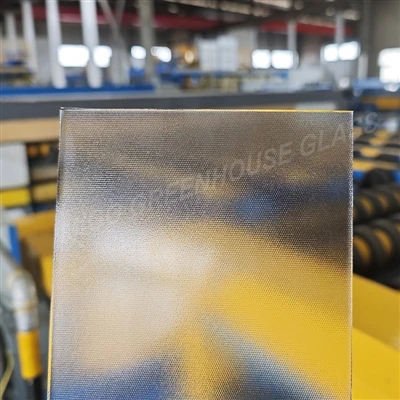
When people talk about solar glass quality, they usually focus on thickness, transmittance or surface defects.
Flatness is mentioned much less.
Maybe because a glass sheet can look perfectly normal when placed on a pallet.
But once it enters a PV module production line, small differences in flatness can become much easier to notice.
Flat glass does more than just look better
Solar glass needs to provide a stable surface during module assembly.
During lamination, the glass works together with other materials such as encapsulant film and solar cells.
If the glass has uneven deformation, the pressure and contact conditions inside the laminator may not be exactly the same across the whole area.
The result is not always an obvious defect.
Sometimes it appears as a process adjustment issue.
Sometimes operators simply feel that one batch is different from another.
Large-size glass makes the challenge bigger
Years ago, module sizes were smaller.
Today, larger formats have become common.
As the glass area increases, small flatness variations have more space to appear.
A slight change that was almost invisible on a smaller piece may become easier to detect on a larger module.
This is one reason why modern solar glass production pays more attention to process stability.
Flatness is decided during manufacturing
Many people think flatness is only related to the final inspection.
Actually, it is influenced much earlier.
Glass forming.
Cooling process.
Internal stress release.
Tempering conditions.
Each step can affect the final shape of the glass.
The challenge is not producing one good sheet.
The challenge is keeping thousands of sheets with similar behavior.
Why module factories care about this hidden parameter
PV module production is a continuous process.
Once equipment settings are optimized, factories prefer materials that behave consistently.
If the glass condition changes from one batch to another, operators may need to spend extra time checking and adjusting.
These small interruptions may not appear in a product specification sheet.
But in large-scale manufacturing, small interruptions add up.
Flatness is not something customers usually see
This is probably why it is often overlooked.
A customer opening a container will usually notice scratches, broken pieces or packaging conditions first.
Flatness is different.
It usually shows its value after the glass enters production.
That is when the production line gives the real feedback.
Good solar glass is not only about optical performance
At MIGO GLASS, we believe solar glass quality is built from many details.
Transmittance is important.
Strength is important.
Surface quality is important.
But some factors, like flatness, quietly influence the entire manufacturing process without attracting much attention.
The best solar glass is not only glass with good numbers on a datasheet.
It is glass that works smoothly inside a customer's production line, day after day.