1. Why Does Iron Content Matter?
Iron oxide ($Fe_2O_3$) is a natural impurity in silica sand that produces a green tint in standard glass, absorbing light in the visible and near-infrared spectrums.
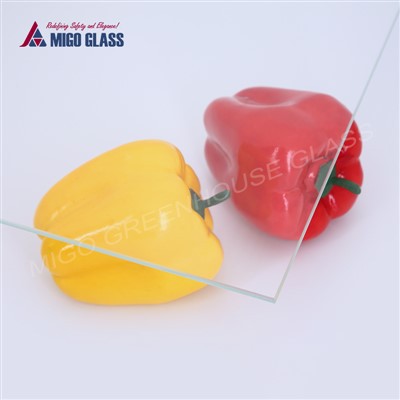
The Threshold: Standard float glass contains $\ge$ 1000 ppm (0.10%) iron, limiting solar transmittance to ~89%. Ultra-clear low-iron glass reduces iron to $\le$ 120 ppm (0.012%), elevating raw glass optical transmittance to 91.5% - 91.8%.
2. Performance Impact in Dual Sectors
Commercial Greenhouses:
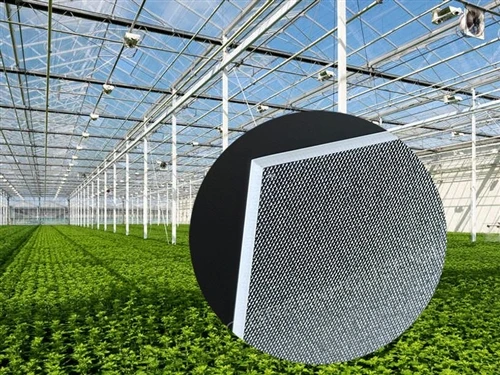
PAR Spectrum Penetration: Allows Photosynthetically Active Radiation (400–700nm) to pass unhindered, maximizing seasonal crop yield.
Thermal Balance: Reduces heat absorbed directly within the glass pane, mitigating thermal stress during summer peaks.
Solar PV & Thermal Collectors:
Power Gain: Delivers 1.5% to 2.0% higher total energy conversion compared to standard float glass.
High NIR Transmission: Maximizes fluid temperature in flat-plate thermal collectors by transmitting more near-infrared radiation.
3. Key Parameter Comparison
| Parameter | Standard Clear Float Glass | Ultra-Clear Low-Iron Glass |
| $Fe_2O_3$ Iron Content | $\ge$ 1000 ppm (0.10%) | $\le$ 120 ppm (0.012%) |
| Edge Appearance | Distinct Greenish Tint | Crystal Clear / Colorless |
| Solar Transmittance (Raw) | ~88.5% – 89.0% | $\ge$ 91.5% |
| Transmittance (with AR Coating) | ~91.0% – 92.5% | $\ge$ 94.0% – 97.5% |
| Target Application | General Windows & Doors | Solar Panels, Collectors & Greenhouses |
4. Why Choose Migo Glass Low-Iron Solutions?
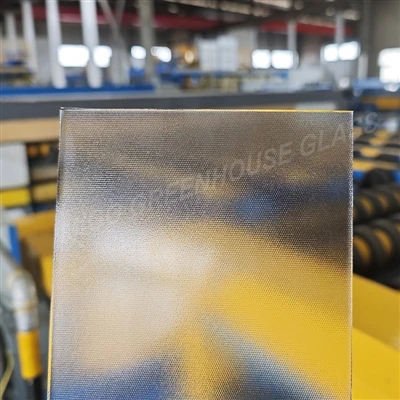
Migo Glass enforces strict raw material selection and magnetic iron separation processes. Available in both flat float and 6-angle/patterned surfaces, our low-iron glass products meet EN12150 and ISO quality certifications for maximum durability and optical performance.
Get Test Reports & Samples: Visit migosolarglass.com or contact our sales team: Jenny@migoglass.com.